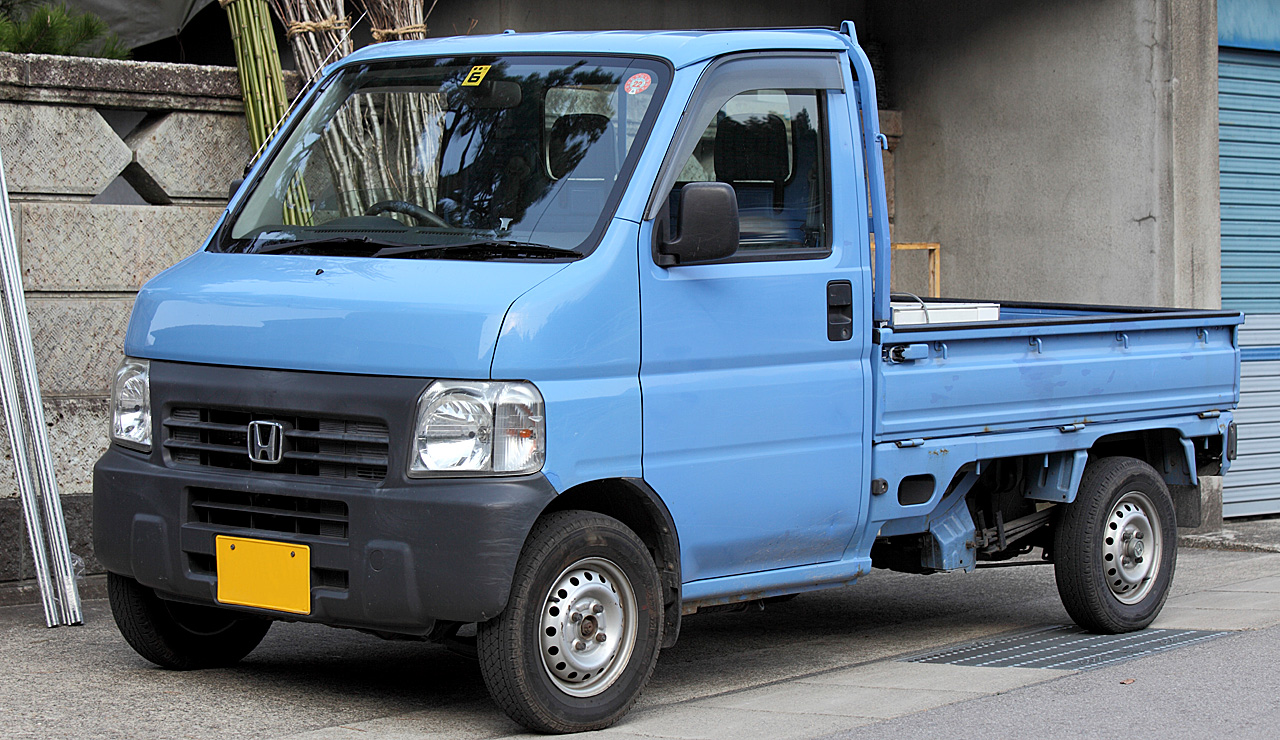
Honda Acty — History
Three generations of Japan's most iconic Kei truck, 1977–2021.
Overview
The Honda Acty is an economical and agile work vehicle that has been in production for over four decades. The Acty truck was first introduced on July 27, 1977, designed to replace Honda's previous Keitoras models. In 1975, the Japanese Government revised regulations for road trucking vehicles, prompting Honda to release the Acty with a midship-mounted 545 cc 2-cylinder engine.
Throughout its production, the Acty underwent several changes and updates across four generations. The truck-only fourth generation was introduced in 2009 at the 41st Tokyo Motor Show.
| Generation | Years | Engine | Model Numbers |
|---|---|---|---|
| 1st Generation | 1977–1988 | EH — 545cc 2-cyl | TA/TB/TC/JB/VD/VH |
| 2nd Generation | 1988–1999 | 547cc 3-cyl SOHC | HA/1/2/3/4/5/HH1/2/3/4 |
| 3rd Generation | 1999–2009 | E07Z — 660cc 3-cyl | — |
| 4th Generation (Truck only) | 2009–2021 | E07Z — 660cc 3-cyl | — |
1st Generation (1977–1988)
On July 27, 1977, Honda introduced the Acty truck, replacing Keitoras models such as the TN360 and T360. The Acty launched with a midship-mounted 545 cc 2-cylinder EH engine. The standard cash price in Tokyo at launch was ¥533,000 (yen).
The Acty van was introduced in 1979 in standard or high-roof configurations. An upper trim called the Honda Street appeared in 1981 for passenger use. 4WD and disc brakes were added in 1983; air conditioning became an option in 1985.
2nd Generation (1988–1999)
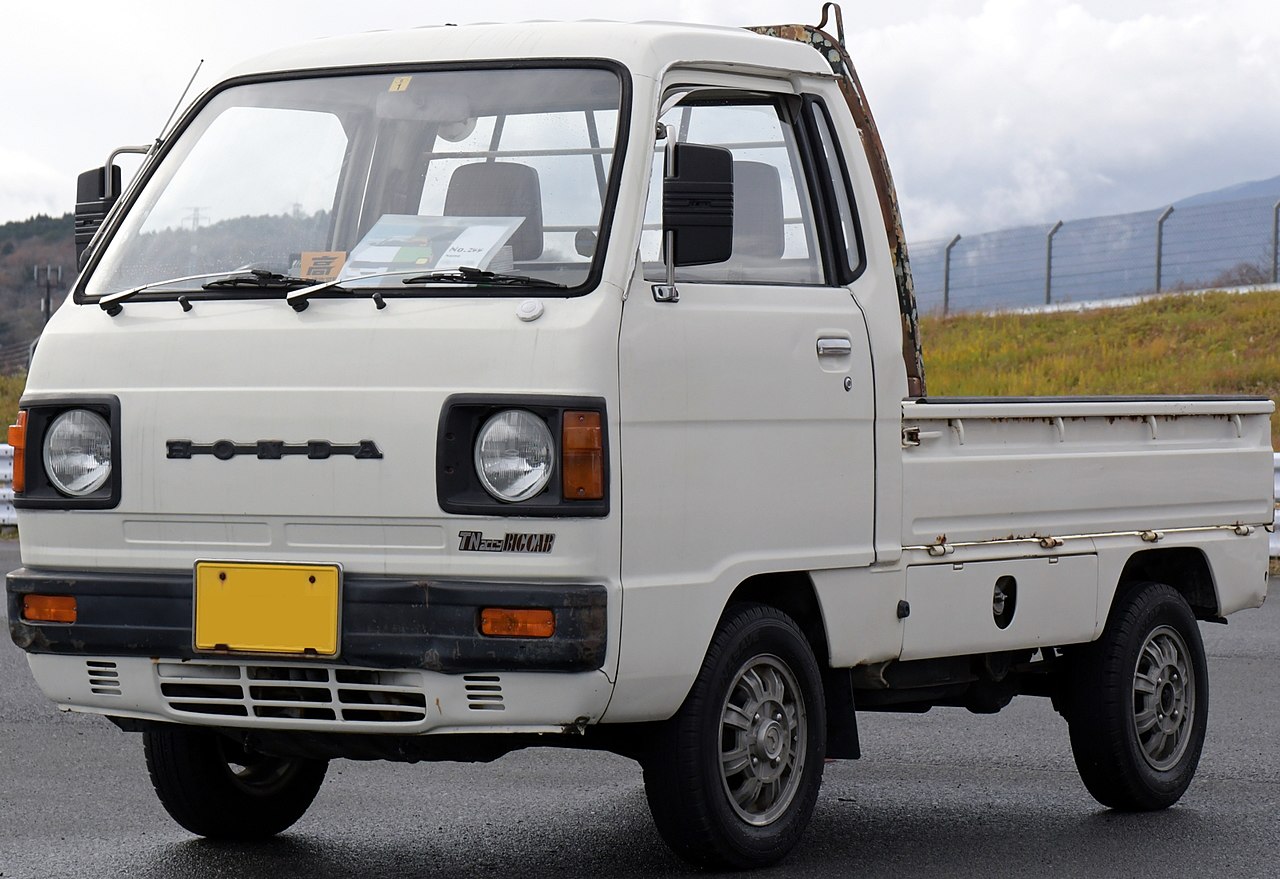
In May 1988, Honda introduced the second generation Acty with a sleek new design and a 547 cc 3-cylinder SOHC engine rated at 34 PS. 4WD models were no longer available with automatic transmission. The standard price at launch was ¥598,000 for the base model truck.
Notable variants include the Acty Attack — designed for farmers with a rear differential lock and ultra-low forward/reverse gears. The Acty Crawler (with treads replacing rear wheels) was released in 1994 and remained in production until 1999. Front turn signals changed from amber to clear in 1996.
3rd Generation (1999–2009)
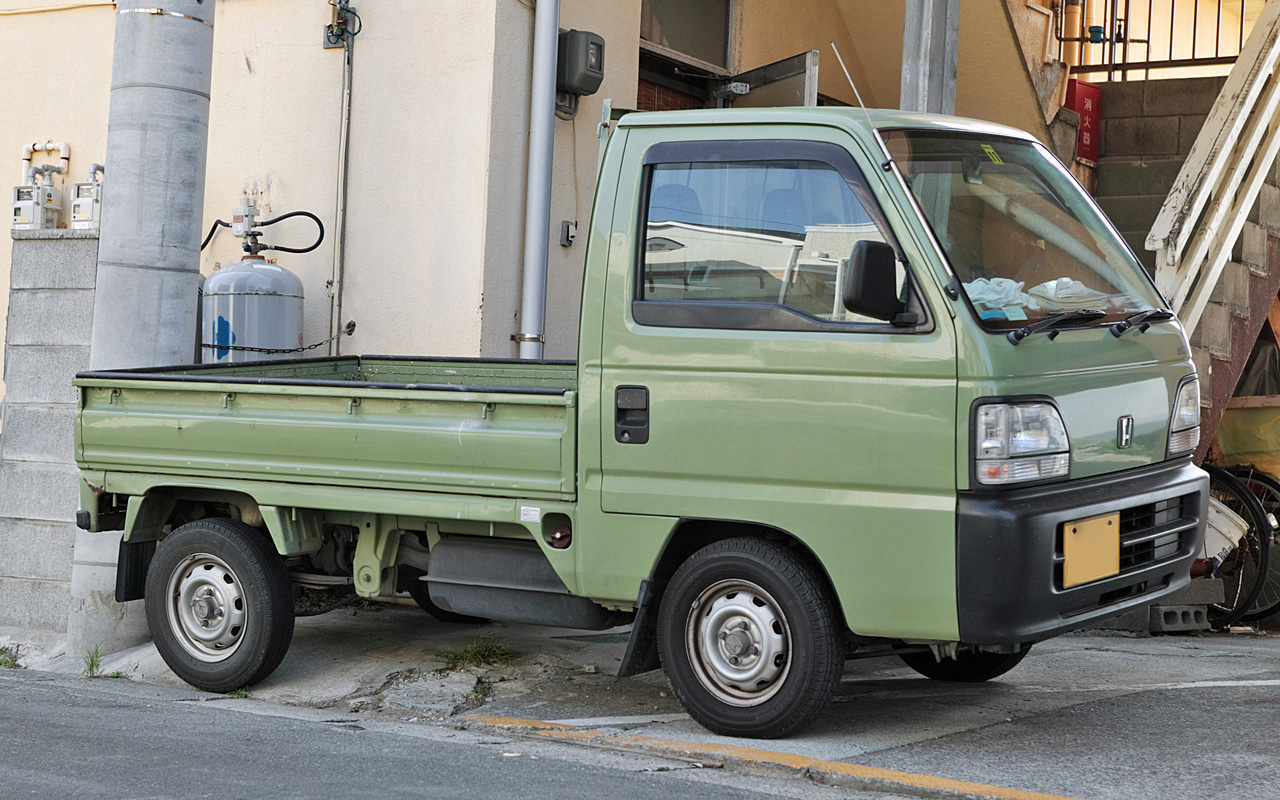
On May 27, 1999, Honda introduced the third generation Acty. The design was heavily influenced by revised Japanese Government safety requirements for front passengers. Honda pushed the driving position rearward while keeping the engine in its traditional midship location — creating a "semi-bonneted" design that retained the mid-engine, RWD layout.
The 656 cc LEV engine in 1999 produced 46 PS (34 kW; 45 hp) at 5,000 rpm. This was later upgraded to the E07Z 660 cc 12-valve inline-three, producing 53 PS (39 kW; 52 hp) at 7,000 rpm and 6.2 kg·m (61 N·m; 45 lb·ft) of torque at 4,000 rpm (4WD models). Electric power steering was added.